About the Author
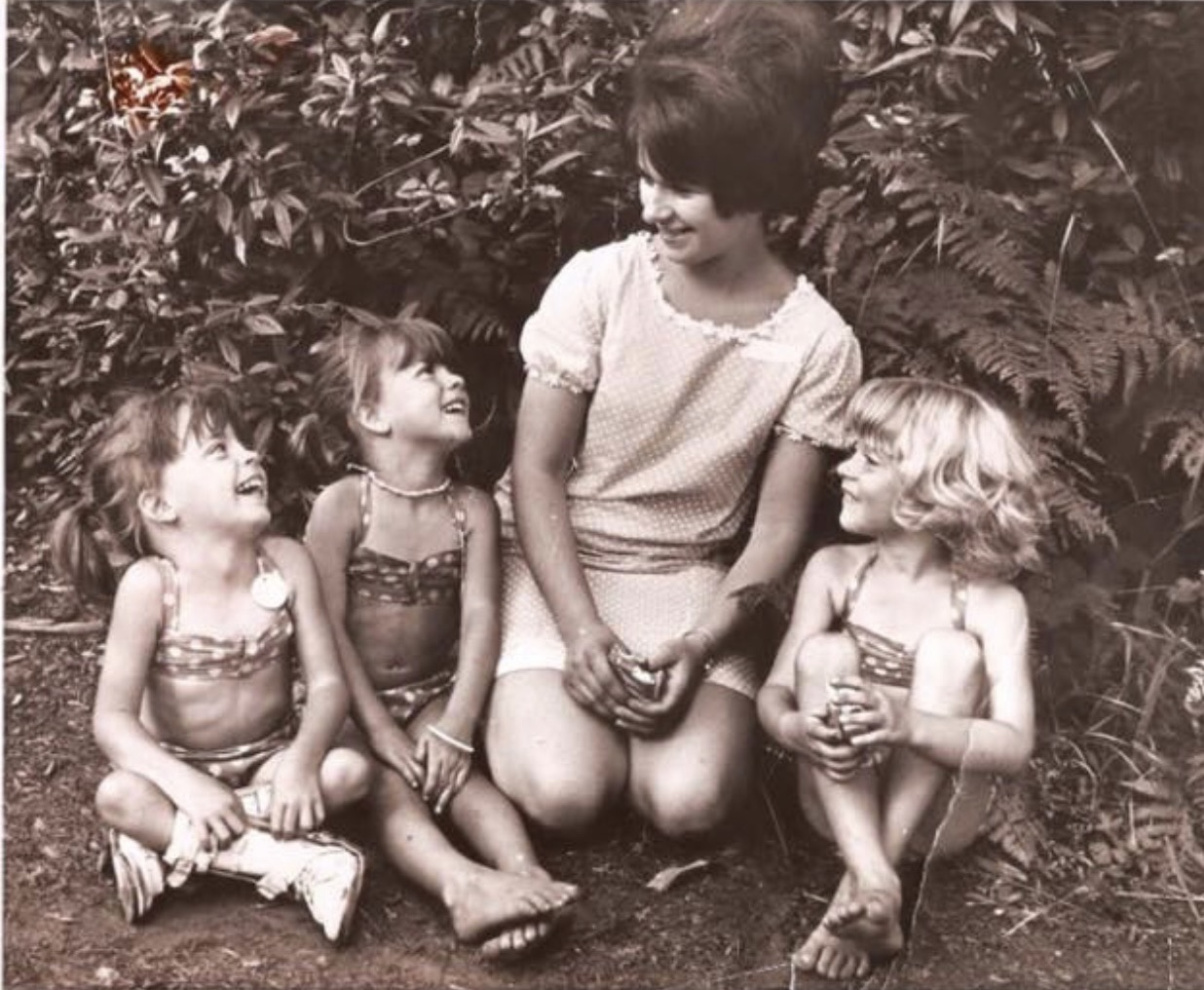
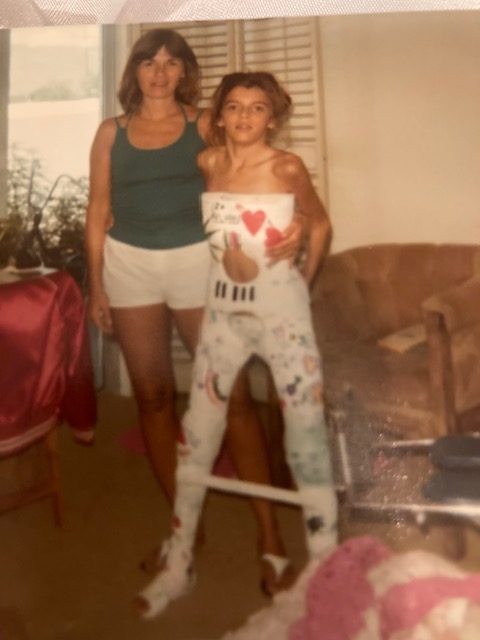


Teri Siri and her twin sister, Traci, were born in Portland, Oregon in September 1964. After a few months, it became clear Teri’s physical development was not on par with her twin’s. Doctors soon determined that Teri had cerebral palsy (CP), a physical condition that would become a defining factor in her life. A strong spirit and determination have proved to be some of Teri’s greatest strengths as she grew up and now lives a full productive life, shattering any early predictions that she would probably be “a vegetable.”
Teri spent much of her early life moving frequently with her young, divorced mother, and her sisters Traci and Tami. Teri’s father decided he was not ready for “daddyhood” and family, so he left, but returned about 10 years later. Teri’s maternal grandparents, Nana and Bapa, were key people in Teri’s life, along with her mom. Nana was determined that Teri would succeed in life and be treated “normally” despite the dire predictions from doctors. The family defied the “experts” who recommended institutionalizing Teri as a baby. Nana was Teri’s biggest inspiration and number one cheerleader for years as she endured multiple surgeries, rehab, and daily challenges living with CP.
Ages and dates are sometimes a blur for Teri because she moved many times as a child. She groups her childhood memories around where she was living at any given time. A part of the frequent moving was due to Teri getting the medical help and surgeries she needed near large children’s hospitals. Moving was also part of the family’s lifestyle. When Teri was a young child, her mom married again, her husband was a musician and a singer in a band. For a couple of years, they moved often, living in Oregon, Northern California, Arizona, and Florida.
When Teri was a pre-teen, her mom divorced and later remarried Teri’s birth father, and the family moved to Arizona where he lived. Teri went to two different high schools in Arizona and then returned to California after her parents divorced for a second time, to finish high school.
Teri moved to Portland, Oregon, when she was 20 in part to be near her Nana and Bapa, but also to establish her independence. She went to college for a while, lived with her best friend, and had her first, longterm, romantic relationship that lasted about eight years. Eventually, Teri got a job with Bonneville Power Administration (BPA) in Portland. She began as a clerk typist and over the years rose to a high-responsibility, high-pressure job as a Scheduler. In this position, Teri bought and sold electric power hourly in what is called “real time.” Her job was similar, in many ways, to working on the stock market, but buying and selling electrical power. After 24 years at BPA, Teri decided to retire early.
Teri loves to travel, a lifelong passion. She writes in her memoir:
Throughout my adult life I’ve made a point to travel a lot, often internationally. If I had listened to other people telling my what I can and can’t do, I probably would’ve been a recluse most of the time. But my inner determination has always led me to be a part of the world and do things I wanted. Nothing pisses me off more than people who tell me, “You can’t.”
My travels have taken me to Europe, Asia, North America, and the South Pacific, using all forms of transportation, including planes, trains, light rail, cars, buses, taxis, motorcycles, ferries, paddleboats, sailboats, and ships. As I finish this book, I am preparing for a trip from New York City across the Atlantic to Europe.
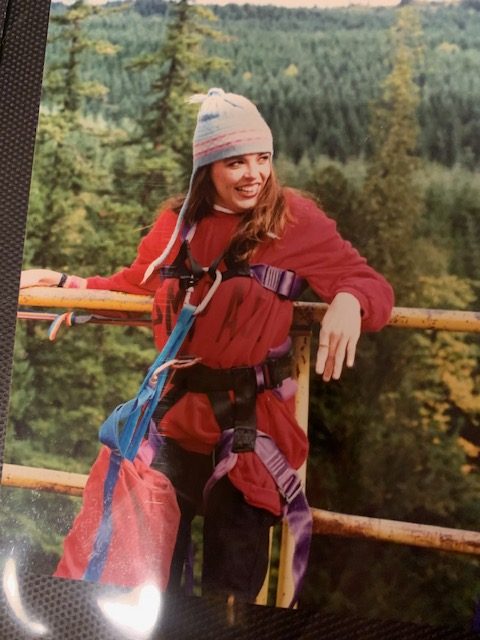
While living in Oregon, Teri worked, married, and led an adventurous life. One of her more exciting activities was bungee jumping. Any activity that someone declares “off limits” for Teri because of her physical challenges, Teri will do it and prove the naysayer wrong. Some of her other adventures include skydiving and skiing.
She and her husband, Joel, traveled in the United States, car camped, and loved being on the road. They traveled internationally several times, beginning with their honeymoon in Europe. Along the way, Teri bought a Jeep and learned to drive, but after about five years decided driving was too stressful. Teri was married for 16 years, but she made the difficult decision to divorce her husband, amicably. They continue to be good friends to this day. After Teri retired from BPA, she decided to move back to San Diego to be closer to her family. She also fell in love again, and has been with her current partner for about eight years. For two years, Teri lived on her partner’s sailboat and they sailed often. Currently, they live in the countryside outside of San Diego, and still sail.
Together, they regularly take extended, cross-country motorcycle trips, sometimes traveling thousands of miles. Teri has been to the annual Sturgis Motorcycle Rally in South Dakota five times. In her book, Teri describes the incredible freedom she feels on the back of a motorcycle. She writes:
In recent years, I have had the thrill of traveling with my boyfriend, Claus, on his motorcycle. It feels as if a whole new world has opened for me. All my life, I have liked moving fast and the feeling of zooming down the road on a sunny day is unbeatable. I love riding motorcycles, or for that matter, doing anything that gets my adrenaline going.
They have traveled north to Alaska for camping & fishing as well as internationally, most recently on the RMS Queen Elizabeth ocean liner from New York City to England, and then by plane to Germany, Switzerland, and more.
Teri says, “I like anything that gets my adrenaline pumping,” which has inspired her to try new things, including skydiving and snow skiing. She also loves music, especially Steven Tyler and Aerosmith, and has attended many concerts in different venues, including Italy and Germany. She hopes to meet him one day. Teri’s bucket list also includes a safari in Africa, and a visit to Borneo to see the endangered orangutans at Camp Leaky,
Teri’s story defies people’s perceptions and prejudices about those with physical challenges. She rejects those biases and the limited, stereotypical thinking about “disabled people.” “What can people with disabilities do?” Teri asks in her memoir. “Read on, I’ll tell you what I can do.”